
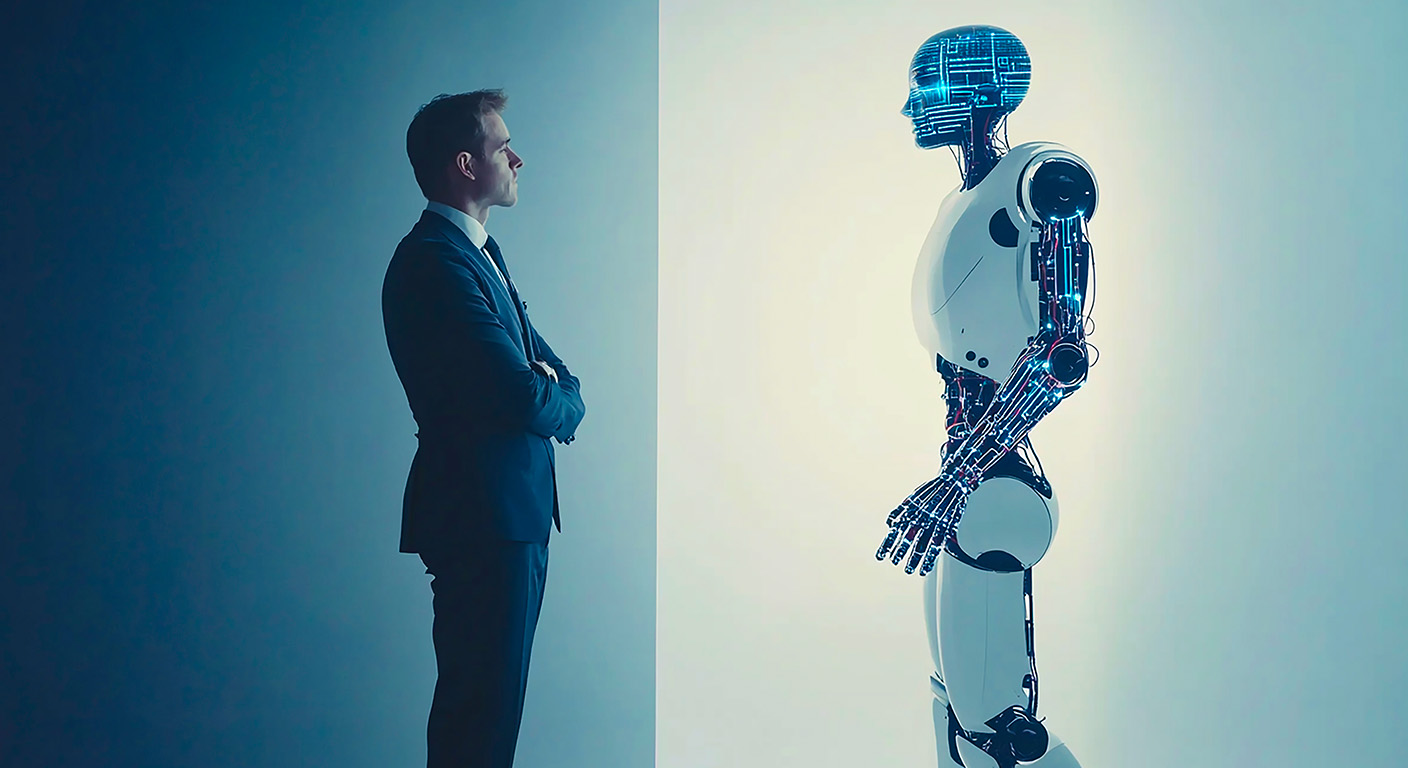
AI Will Not Replace Leaders—But It Will Expose Ineffective Ones
Each successive wave of technological disruption forces organizations to interrogate the nature of human contribution. The question that accompanies every inflection point is familiar: what is it that people do that machines cannot?
Artificial intelligence is generating precisely that interrogation today, and it is generating it at a scale and velocity that previous technological revolutions did not.
The public discourse has coalesced around a particular framing: will AI replace managers? It is a reasonable question on the surface. But it is, in important respects, the wrong one.
The more consequential question is this: what happens when artificial intelligence makes leadership performance visible with a precision that was previously unattainable?
The End of Invisible Leadership Failure
Historically, the assessment of leadership effectiveness has been a slow, imprecise, and largely subjective process. An employee may disengage or resign as a direct consequence of poor leadership, yet the causal relationship remains obscured. A team may exhibit declining performance, deteriorating trust, or communication breakdowns for months before the pattern surfaces to senior attention—and even then, the diagnosis is often incomplete.

AI fundamentally alters this dynamic. Sophisticated systems are now capable of identifying patterns in engagement, collaboration, communication quality, and behavioral consistency that were previously invisible or accessible only through costly, time-limited interventions such as 360-degree assessments or annual surveys.
Platforms at the intersection of AI and leadership development—including Blended Leading—are actively developing capabilities that translate these behavioral signals